There’s a certain feeling riders are always trying to create.
Stable… without gripping.
Deep… without forcing.
Soft… without collapsing.
And often, riders assume that feeling comes from more riding.
More awareness.
More corrections.
More trying.
But underneath all of that, there’s usually something much more physical happening.
Because one of the biggest missing pieces in many riders isn’t technique.
It’s support.
And one of the most important support systems in the rider’s body lives somewhere most riders rarely think about:
the glutes.
Glutes Are Not Just “Gym Muscles”
I think glutes are often misunderstood in the riding world.
People associate them with aesthetics.
Or generic gym training.
But in riding, the glutes are part of something much bigger.
They help stabilise the pelvis.
Support single-leg balance.
Control rotation through the hips.
Absorb force through movement.
And when they’re working well, the whole body tends to organise itself more easily around them.
The seat becomes quieter.
The pelvis feels more stable.
The legs stop trying to do so much.
Not because the rider is “trying harder”…but because the body finally has somewhere reliable to organise itself from.
What Weak Glutes Often Feel Like In The Saddle
Weak glutes rarely feel like weak glutes.
Instead, riders usually feel the compensation patterns around them.
Things like:
gripping through the thighs
unstable lower legs
collapsing through one hip
difficulty sitting deep
tension through the hip flexors
lower back tightness
feeling “busy” in the saddle
And often, riders assume those things are technique problems.
But many of them are actually the body searching for stability.
Because if the glutes aren’t supporting the pelvis properly…other muscles quietly step in.
Usually the hip flexors.
The thighs.
The lower back.
And those muscles are very good at creating tension.
Not softness.
The Difference Between Holding And Support
This is where things become really important.
A lot of riders are trying to create stability by holding themselves together.
Holding the posture.
Holding the leg still.
Holding the seat deep.
But true support feels very different from holding.
Support has movement inside it.
It allows the body to stay organised without becoming rigid.
And strong glutes play a huge role in that.
Because when the pelvis feels supported underneath you, the body no longer needs to grip so aggressively to stay balanced.
That’s when riders often experience a completely different feeling in the saddle.
Less effort.
More connection.
The Forgotten Rider Pattern
One of the most common things I see is riders trying to create softness from a body that doesn’t yet feel stable.
And that’s hard.
Because the nervous system will always prioritise stability first.
So if the pelvis doesn’t feel supported…the body tightens around it.
Not because the rider is doing anything wrong.
But because the system is trying to help.
That’s why so many riders feel better when they finally start building strength specifically for riding.
Not because they become “harder.”
But because the body begins trusting itself more.
3 Exercises Every Rider Should Be Doing
These are some of my favourite exercises for helping riders build glute strength that actually transfers into the saddle.
Not bodybuilding strength.
Rider strength.
The kind that improves stability, balance, and control while still allowing softness and movement.
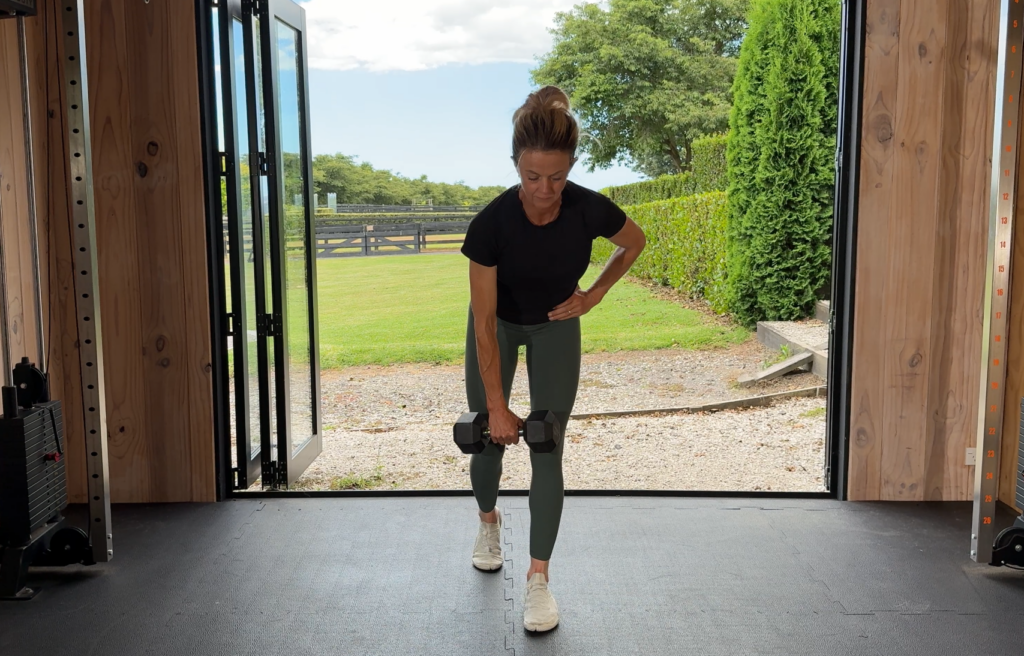
1. Single Leg RDL
Teaching The Pelvis To Stabilise
This is one of the most valuable exercises riders can do because riding is never perfectly symmetrical.
One side of the body is constantly stabilising while the other side moves, adjusts, and responds to the horse underneath us.
And if the pelvis can’t organise itself well during that movement, riders often start gripping through the thighs, tightening through the hip flexors, or collapsing through one side without even realising it.
The Single Leg RDL helps build the kind of glute and hip support that allows the pelvis to feel more stable and organised underneath the rider.
Not rigid.
Stable.
There’s an important difference between those two things in riding.
What I love most about this exercise is that it teaches riders how to balance and stabilise without hardening everything else around it.
Done slowly and with control, it helps build awareness through the standing leg, encourages the glutes to actually do their job, and reduces the body’s tendency to overuse the lower back when trying to create stability.
2. Sliding Lateral Lunge
Strength And Openness Together
One of the interesting things about riders is that many are not just tight… they’re tight and unstable at the same time.
The hips can feel restricted, yet the body still doesn’t feel properly supported underneath the movement.
And this is often where riders get stuck—stretching more, while still feeling unstable in the saddle.
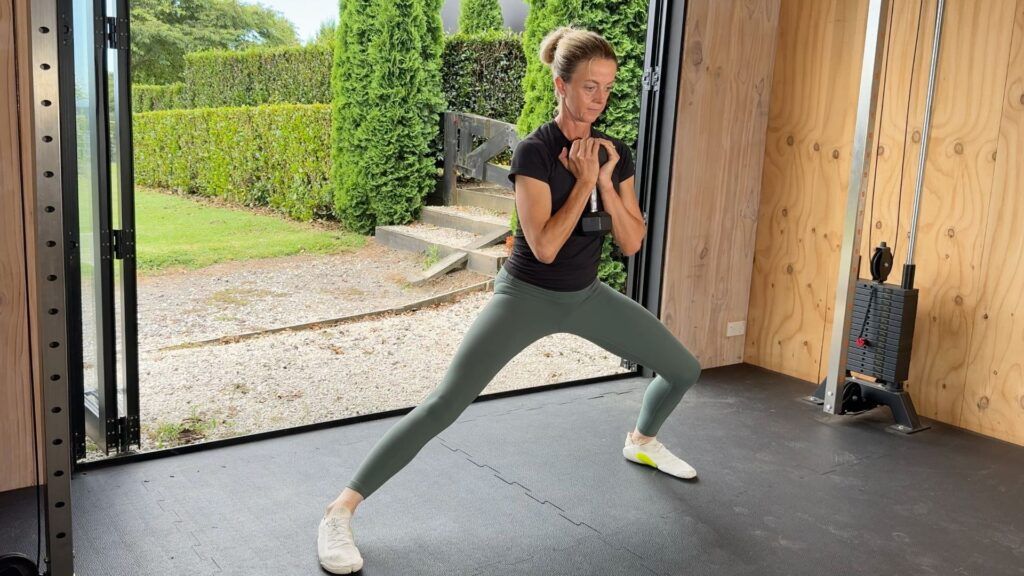
That’s why I love the Sliding Lateral Lunge so much for riders.
It develops strength through the glutes and inner thighs while also improving movement through the hips and pelvis.
Instead of separating “mobility work” from “strength work,” this exercise blends the two together.
The body learns how to open through the hips while still feeling supported and organised.
And that’s incredibly important in riding.
Because riders don’t just need flexibility.
They need the nervous system to trust those new ranges of movement enough that the body no longer feels the need to grip or protect itself inside them.
Done slowly and smoothly, this exercise helps riders build exactly that feeling—strength and softness existing together at the same time.
3. Goblet Squat
Building Support Underneath The Movement
There’s a groundedness that strong riders often have.
Not stiffness.
Not tension.
Support.
The kind of support that allows the body to stay organised without gripping or bracing against the movement underneath it.
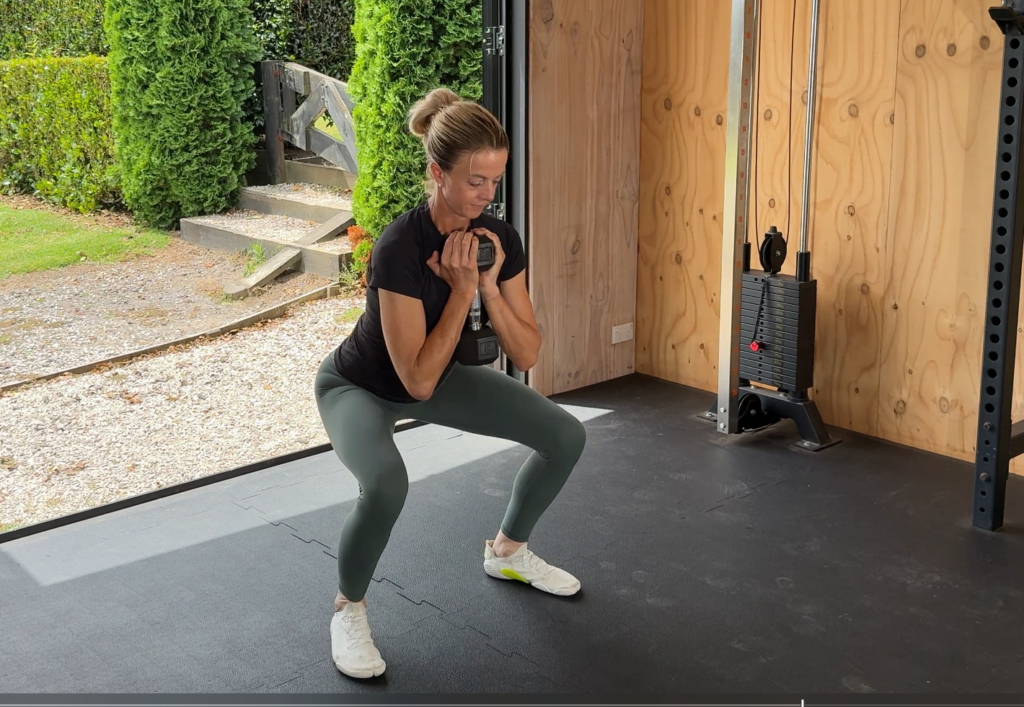
And Goblet Squats are one of my favourite exercises for helping riders build that feeling.
They strengthen the glutes, core, and lower body together in a way that teaches the body how to stabilise under load while still allowing the hips to move naturally.
Which matters more in riding than many people realise, because riding constantly asks the body to absorb force, reorganise balance, and respond to movement at the same time.
When riders begin building this kind of support, things often start changing quietly in the saddle.
The legs stop working so hard to stabilise everything.
Transitions feel more organised.
The seat feels deeper and more supported without forcing it.
Not because the rider is trying harder… but because the body no longer feels like it’s fighting to hold itself together through movement.
Done well, Goblet Squats help riders feel balanced through the feet, supported through the pelvis, and connected through the whole body—while still breathing and moving naturally inside the exercise.
And that combination of strength and softness is exactly what so many riders are actually searching for in the saddle.
Strength Should Make Riding Feel Softer
The riders with the quietest seats are rarely the riders “trying” the hardest.
More often, they’re riders whose bodies feel supported enough underneath them… that they no longer need to grip to stay stable.
That’s what good strength training should do.
Not make the body harder.
But make softness feel safer.
Where To Begin
If your riding feels unstable, tense, or overly effortful, it may not be about riding more.
It may be about giving your body the support it’s been missing underneath the movement.
That’s exactly why inside DRT we combine both strength and mobility training specifically for riders.
The Hip Suppleness Program helps restore movement and freedom through the hips.
And the Strength Roadmap helps build the support, balance, and control that allows that movement to actually transfer into the saddle.
Because when the body feels supported…everything else starts to soften around it.