When riders talk about having “tight hips,” what they’re often feeling is something slightly different.
The hips aren’t always restricted because they lack flexibility.
Very often, they’re simply closing — narrowing and stabilising to help the body maintain balance.
This is a natural response from the body. When the rider feels unstable or unsupported, the hips often step in to help.
Understanding the signs of closing hips can help you recognise what your body is telling you — and guide you toward the work that will help the most.
Here are five common signs riders experience when their hips begin to close in the saddle.
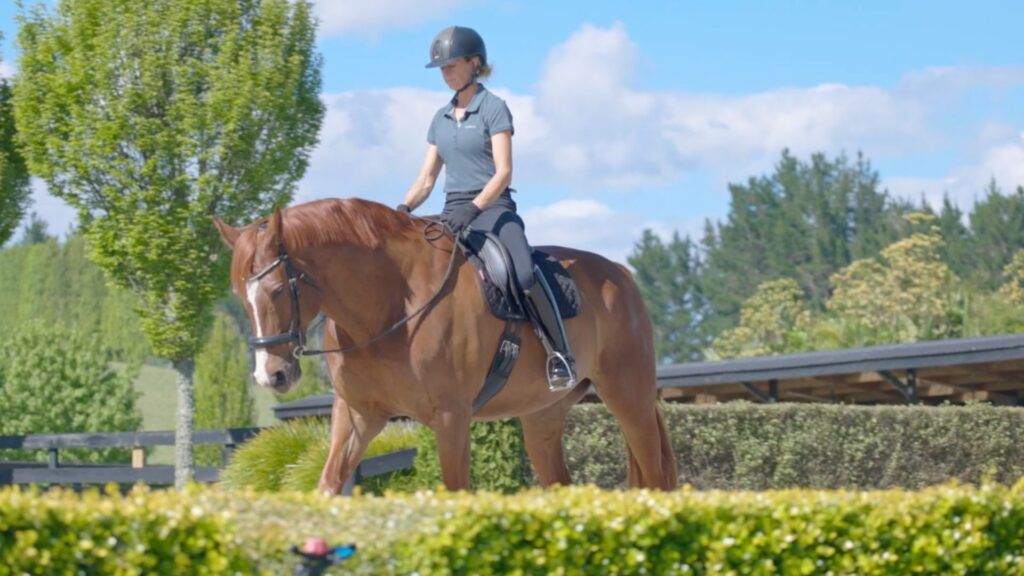
1. Thighs Grip
One of the first places riders notice closing hips is during transitions.
As the horse changes gait, the body must quickly reorganise to stay balanced. If the pelvis feels unsupported, the thighs often tighten and grip the saddle.
This gripping isn’t a mistake — it’s your body trying to stabilise you.
But over time, gripping through the thighs can make it harder for the hips to move freely and follow the horse’s movement.
Developing hip suppleness helps the pelvis stay mobile during transitions, while strength through the core centre helps the body remain balanced without needing to grip.
2. Seat Feels Stuck
Sitting trot requires the pelvis to absorb movement in multiple directions.
When the hips are free and responsive, the seat follows the rhythm of the horse.
But when the hips close, the pelvis often becomes restricted. Instead of following the motion, the rider may feel stuck, bouncing, or bracing through the lower back.
This often signals that the hips need more freedom to move and the pelvis needs more support from the surrounding muscles.
Suppleness creates the movement. Strength helps the body trust that movement.
3. Lower Leg Swings
A swinging lower leg is often connected to what’s happening higher up in the body.
When the pelvis loses stability, the rider’s legs frequently step in to help with balance.
Instead of draping naturally, the legs begin to search for security.
This is another example of the body trying to stabilise itself.
Improving hip mobility allows the legs to hang more freely, while building strength around the pelvis reduces the need for the legs to compensate.
4. One Hip Feels Tight
Almost every rider has some degree of asymmetry.
One hip may feel tighter, heavier, or less responsive than the other.
When this happens, the pelvis can begin to shift slightly to one side, which often leads to uneven seat bones and a feeling that the horse travels differently on each rein.
Developing awareness of this asymmetry is an important step.
Consistent hip mobility work can help restore balance between the sides, while strength work helps stabilise the pelvis so both hips can move more evenly.
5. Busy Hands
Many riders are surprised to learn that tension in the hands often begins much lower in the body.
When the hips close and the pelvis loses organisation, the rider may begin stabilising through the arms instead.
This can lead to busy hands, uneven contact, or difficulty maintaining a steady connection with the horse.
When the centre of the body becomes more stable and the hips move more freely, the hands often quieten naturally.
The seat becomes the primary connection point again.
What Your Hips Are Telling You
If you recognise any of these signs, it doesn’t mean something is wrong.
It simply means your body is trying to stabilise itself.
Often the solution isn’t forcing the hips open or trying to relax them while riding.
Instead, the goal is to create the conditions where the hips can move freely and feel supported at the same time.
This is where the combination of hip suppleness and strength becomes so powerful.
Suppleness creates the space for the pelvis to move.
Strength builds the support through that range that allows that movement to remain available when riding becomes more demanding.
Over time, the hips no longer need to protect you.
They simply follow the movement of the horse.
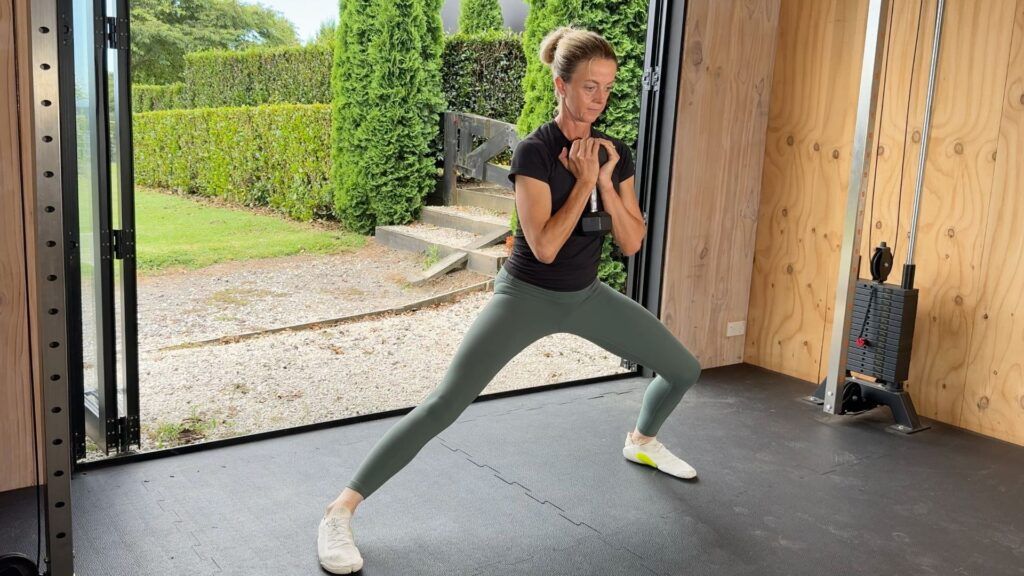
Building Hips That Stay Open in the Saddle
If you want hips that feel softer, freer, and more responsive in the saddle, start with consistent hip mobility work to restore freedom through the pelvis.
From there, building strength around the hips and core helps the body maintain that freedom when the ride becomes more challenging.
This layered approach — suppleness first, strength second — helps riders create the kind of balanced seat that allows the horse to move more freely underneath them.
If improving how your hips move in the saddle is something you’re working on, this is exactly the type of work we focus on inside the Dressage Rider Training membership.
Riders begin by developing hip suppleness to create freedom through the pelvis, and then progressively build strength and stability so that freedom can be maintained when riding becomes more demanding.
The programs are designed specifically for riders, combining mobility, strength, and body awareness to help you feel more balanced, supported, and connected in the saddle.
Check out all our membershipoptions here